Suncraft Coins & Blueprints
How the full-release economy turns villager requests into purchasable shortcuts.
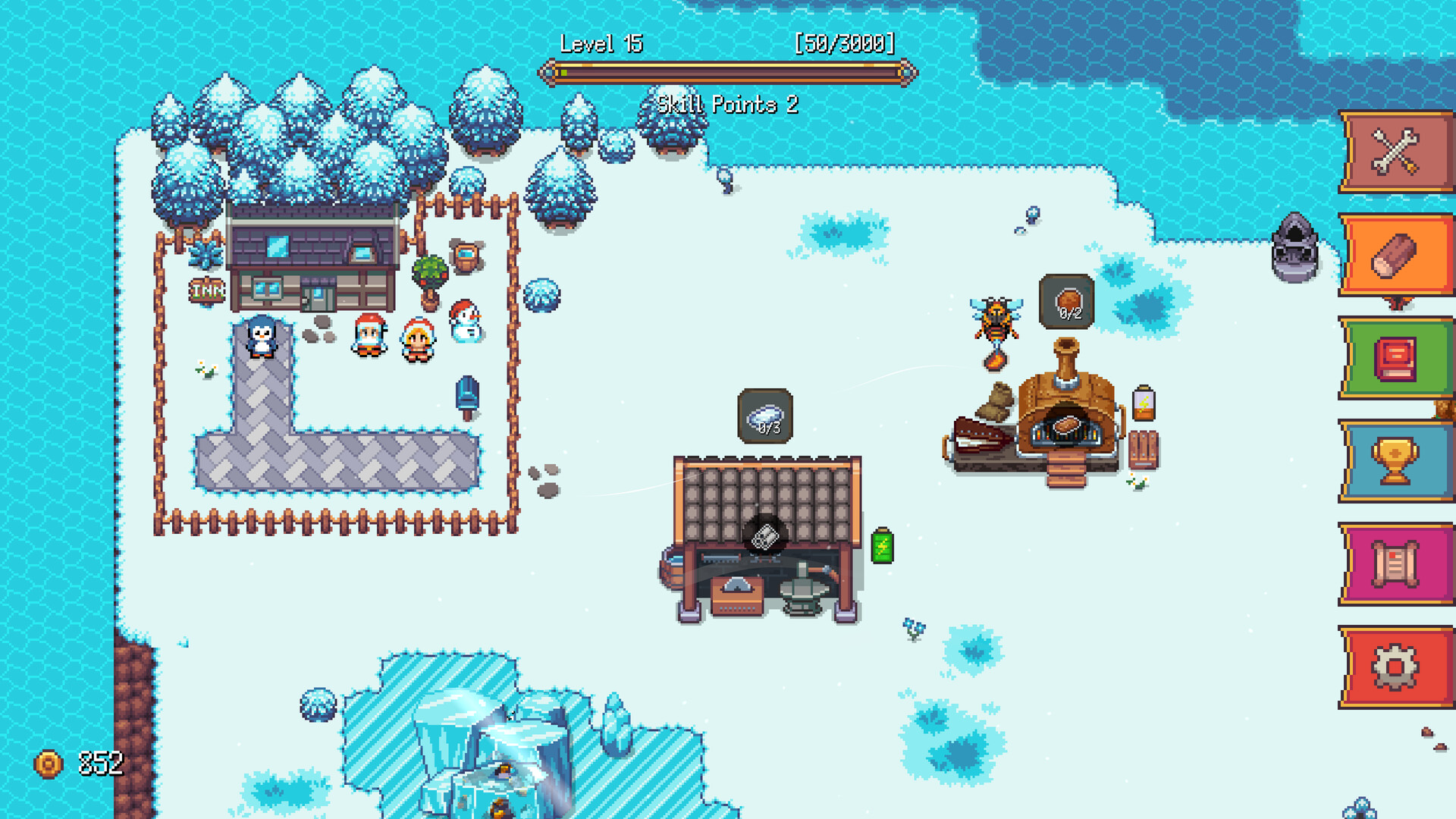
Before the July 28, 2026 full release, Suncraft progression leaned almost entirely on smelting, carrying, and hand-delivering materials. Devlog #1 (June 2026) introduced a parallel economy: coins earned through village activity, spent on blueprints, ingredients, and gems at shops tied to the request system. If you imported a demo save on launch day, coins may feel sudden — this guide explains how the currency fits beside furnaces, the skill tree, and Automation and Ember without wasting early income.
Pair this page with Full Release for the broader 1.0 feature list and Crafting Recipes when comparing buy prices against walk-and-smelt time.
What coins are for
Coins are soft currency — not premium cash. Spicy Tuna Games positioned them as relief from pure grind: buy a blueprint you would otherwise hunt across biomes, purchase bulk ingredients during a tram rush, or pick up gems needed for late equipment tiers without re-running every node line.
Typical coin sinks include:
- Blueprint purchases — unlock workstation plans faster than quest-only unlocks in some branches.
- Ingredient bundles — planks, glass, steel inputs when Quest Walkthrough deadlines stack.
- Gems and specialty mats — tied to equipment tier upgrades on the redesigned gear page (Equipment Upgrades).
- Quality-of-life restocks — fuel-adjacent items when Ember automation is not yet online.
Coins do not replace skill points or Ember unlocks. They shorten logistics, not mastery.
How you earn coins
Devlog #1 bundled coins with an expanded requests system — villager boards and structured deliveries that pay coin rewards on completion alongside story progress. Exact payout tables vary by quest act; early requests after demo content tend to pay modest amounts while late Sunspire restoration lines pay more.
Reliable earners:
- Completing request boards — check the village hub after each major quest milestone in Quest Walkthrough.
- Repeatable or chained deliveries — some NPCs cycle ingredient asks once an area unlocks; see Villagers and Quests for who pays best.
- Story milestones — finishing bridge, tram, and new-region beats often triggers lump-sum coin grants in 1.0.
Coins generally do not drop from clicking tree stumps. Treat gathering as material income and requests as coin income — running both in parallel is the intended 1.0 loop.
Blueprint shopping strategy
Blueprints define which machines and structures you can place. Demo players unlocked many through Eric’s workshop tutorial; full release adds purchasable plans that skip optional side treks.
Buy a blueprint when:
- The recipe unlock gates a quest you are actively pursuing.
- Walking to a distant biome costs more time than the coin price (use Map and Biomes to estimate hike length).
- You need duplicate furnaces or storage and the shop sells the plan cheaper than opportunity cost.
Craft and gather when:
- You are still learning the core loop — Getting Started intentionally teaches manual chains first.
- Coin income is low and materials are abundant near Sunspire.
- The blueprint only saves a cosmetic step with no production gain.
Cross-check every purchase against Resource Chain Planner smelting ratios. A blueprint that unlocks steel processing early can pay for itself if it prevents idle furnaces during tram construction.
Requests versus classic quests
Classic story quests — Dad’s bridge, cargo tram chassis, magma shard deliveries — still gate biomes and cinematics. Requests layer optional or recurring economic tasks that feed coins and sometimes ingredients.
Workflow tip: after each play session, scan the request board before logging off. Accept deliveries whose materials you already stock in chests unlocked via Skill Tree Guide. Turn in two or three small requests before tackling a multi-ingredient story quest so coin balance stays positive for the next blueprint impulse buy.
Banquet Table and serving economy
Devlog #2 highlighted the Banquet Table and related serving mechanics tied to village requests. Serving workloads connect crafted food or processed goods to NPC satisfaction and coin flow. Treat the Banquet Table as a mid-game coin multiplier — set it up after parallel furnaces run reliably (Crafting and Furnace) and before you chase Endgame and Story finale beats.
If a request asks for banquet output you have never crafted, backtrack to recipe pages rather than buying out every ingredient with coins. Shopping is for bottlenecks, not skipped learning.
Coin mistakes to avoid
- Blueprint hoarding — buying plans you cannot fuel yet clogs progression mentally; unlock automation skills first on Skill Priority.
- Gem panic buys — compare gem shop prices to one focused gathering trip in the biome listed on Map and Biomes.
- Ignoring carry limits — coins do not expand Deep Pockets; deposit runs still matter per Controls.
- Skipping demo carryover checks — imported saves may already own blueprints; read Demo Carryover before duplicate purchases.
Late-game coin role
After Ember automates fuel and gather loops, coins shift from emergency relief to finishing tax — buying the last gem stack for Sunspire tier gear or clearing a request chain while you focus on story puzzles. The mysterious new region Devlog #1 teased often demands upgraded stats; coins let you skip re-grinding lower tiers if you already earned surplus from requests.
Track Steam Achievements alongside spending — some restoration milestones pop when coin totals or request counts hit thresholds.
Quick reference links
- New economy overview: Full Release
- Smelting math: Crafting Recipes
- NPC payers: Villagers and Quests
- Automation timing: Automation and Ember
Coins reward players who treat Sunspire as a village economy, not only a clicker mine. Earn through requests, spend on real bottlenecks, and keep furnaces running while shopping — that balance is the 1.0 meta Spicy Tuna Games described in summer devlogs.
Frequently Asked Questions
Quick answers to the most common questions.
When do coins unlock in Suncraft?
Coins arrive with the full-release economy tied to villager requests — typically after early demo-era quests when the request board expands. Exact timing varies by save and quest order.
Can I buy every blueprint with coins?
Many blueprints are purchasable, but some remain quest-gated for story reasons. Check the shop after major milestones before assuming a plan is for sale.
Do coins carry over from the demo?
Demo saves import village state into 1.0. Coin balances follow your imported progress — see Demo Carryover for what transfers on launch day.
Are gems better to buy or farm?
Compare shop gem prices to gathering time in the relevant biome. Late game favors buying when automation frees your attention for story content.
How do requests differ from story quests?
Story quests gate areas and narrative beats. Requests add optional or recurring deliveries that pay coins and ingredients on top of main progression.
Does the Banquet Table use coins?
Banquet Table serving ties into request and village economy loops. Craft inputs when possible; use coins for ingredients you cannot farm quickly.